
Are Nissan Skyline Cars Illegal in the U.S.?
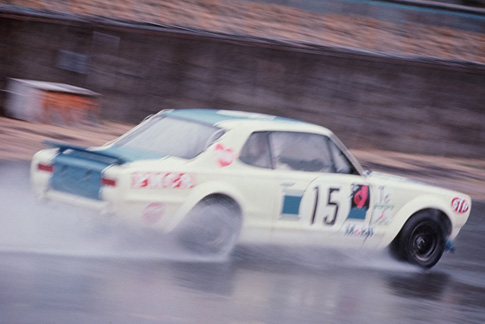
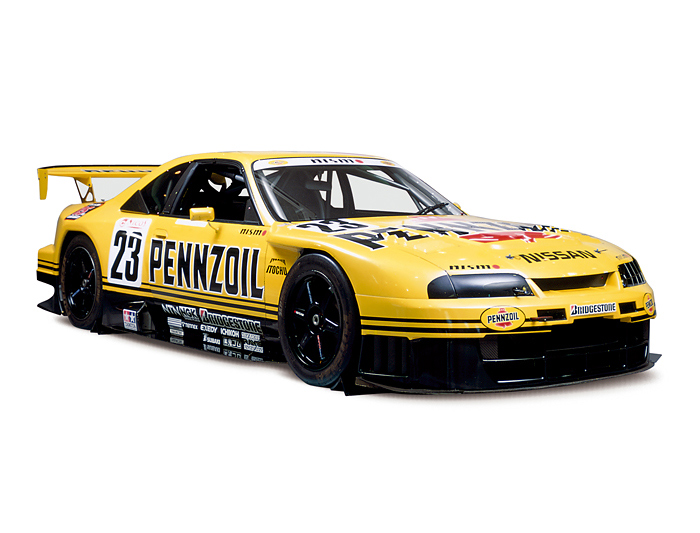
Photo Source/Copyright: Nissan Global
Are Nissan Skyline cars illegal in America? The great news is that they are entirely legal, provided you follow federal import guidelines and age restrictions. Enthusiasts actively import and register these legendary performance vehicles across the country every single day. The global car community reveres the Skyline GT-R for its sophisticated handling dynamics, highly modifiable engine architecture, and iconic design. This guide explains the historical regulatory barriers that initially kept the Skyline out of America, traces its mechanical evolution, and details how this remarkable vehicle legally enters the United States today.
For decades, American fans could only experience the thrill of the Skyline through video games, automotive magazines, and blockbuster movie franchises like the ‘Fast & Furious.’ The vehicle remained a tantalizing forbidden fruit for Western buyers because it was engineered specifically for the right-hand-drive Japanese Domestic Market (JDM). However, patience and evolving import regulations have finally opened the floodgates for this highly coveted automotive treasure.
Origins of the Nissan Skyline
The Prince Motor Company introduced the first Skyline in 1957 as a standard passenger vehicle. Following a 1966 merger with Nissan, engineers shifted their focus toward competitive performance. In 1969, Nissan introduced the high-performance GT-R variant, affectionately nicknamed the Hakosuka. This lightweight coupe featured a 2.0-liter, double-overhead-cam inline-six engine producing 160 horsepower. The Hakosuka achieved monumental motorsport success, securing an incredible 50 race wins in Japanese touring car competitions by March 20, 1972.
The legendary Shinichiro Sakurai was the driving force behind the Skyline supercar’s early development, transforming it from a modest luxury car into an unstoppable track monster. The Hakosuka originally debuted as a four-door sedan, which dominated local tracks before Nissan released the iconic two-door coupe version in 1971. This relentless winning streak famously culminated in a stunning final victory at the Fuji 300-kilometer Speed Race, driven through heavy rain by K. Takahashi.
Evolution Into a Global Legend
In 1989, Nissan achieved a major engineering breakthrough with the R32-generation GT-R. The Australian media dubbed the vehicle Godzilla after it completely dominated the Australian Touring Car Championship. The R32 utilized the advanced ATTESA E-TS all-wheel-drive (AWD) system to maximize traction and cornering speeds. Nissan paired this system with the RB26DETT twin-turbo inline-six engine to produce massive, reliable power that outclassed the competition.
The ATTESA E-TS system was a marvel of modern engineering, operating primarily as a rear-wheel-drive (RWD) platform until traction loss occurred, at which point it seamlessly diverted power to the front wheels. This advanced setup enabled the vehicle to outmaneuver competitors on the street and on demanding racing circuits. The subsequent R33 and R34 generations continued to refine this successful formula, introducing stiffer chassis designs, improved aerodynamics, and even faster lap times.
Why the Skyline GT-R Was Illegal in the U.S.
Despite its global success, the Skyline GT-R remained unavailable to American buyers because Nissan built it exclusively for the Japanese Domestic Market. The United States utilizes a unique set of motor vehicle safety and emission regulations that differ from international standards. As such, Nissan avoided the expensive process of federal crash testing and emissions certification because it didn’t plan to sell the vehicle in America.
The National Highway Traffic Safety Administration (NHTSA) and the Environmental Protection Agency (EPA) strictly enforce these specific guidelines. Altering a low-volume foreign sports car to meet complex American rules, such as installing particular side-impact door beams and specialized OBD-II diagnostic equipment, could cost a manufacturer tens of millions of dollars. By avoiding this immense financial burden, Nissan kept the GT-R exclusive to its home market, inadvertently sparking a strong underground demand for the platform abroad.
The 25-Year Import Rule
The most reliable legal pathway to bring a Skyline into America relies on the 25-year import rule. The federal government automatically exempts vehicles from modern safety and emissions requirements once they reach 25 years of age. This rolling timeframe makes importing classic 1989-1994 R32 models, as well as 1995-1998 R33 models, a remarkably straightforward process today.
This brilliant regulatory exception transforms once-illegal machines into fully celebrated classic collector cars. The moment a Skyline surpasses its 25th birthday, based exactly on its original month and year of manufacture, it seamlessly bypasses standard Department of Transportation (DoT) restrictions. Enthusiasts can then safely import these incredible feats of engineering and proudly register them for legal highway use in most states without risking seizure or fines.
Importing Vehicles Under 25 Years Old
Importing a vehicle under 25 years old requires complex modifications to meet rigid safety standards. Still, importers can legally utilize the Show or Display exemption for rare, historically significant vehicles. For example, the National Highway Traffic Safety Administration permits the importation of the 1999 Nissan Skyline R34 GT-R V-Spec Early Model Limited Edition under this rule. The natural progression of the 25-year rule ensures that ownership becomes increasingly accessible each year.
The Show or Display rule is highly exclusive, applying only to vehicles with a production run of fewer than 500 units. Under this exemption, lucky owners can legally import ultra-rare trims, such as the track-focused R34 GT-R V-Spec II N1 or the stunning Midnight Purple II editions. Historically, a company named Motorex attempted to legally import younger Skyline models by conducting expensive crash tests. Regardless, it failed to perform the required safety changes and eventually shut down, leaving the Show or Display rule as the best modern alternative for newer models.
Why the Skyline Is a Tuner Favorite
The legal arrival of the Skyline reshaped American car culture. A robust aftermarket system now flourishes to support these vehicles. Tuners highly value the GT-R for its customization potential, frequently upgrading the RB26DETT engine. For extreme builds, enthusiasts utilize the reinforced Nismo N1 engine block, identified by its 24U casting mark, which accommodates a larger 86-millimeter bore for enhanced durability. Owners also benefit greatly from the NISMO Heritage Parts program, which actively remanufactures discontinued components directly for the enthusiast community.
The standard RB26DETT engine, bearing the 05U casting mark, already provides a fantastic, bulletproof foundation for impressive horsepower gains. By tapping into the colossal global aftermarket, drivers can easily swap factory components for high-flow turbochargers and advanced cooling systems. Moreover, the NISMO Heritage Parts program has rapidly expanded from a modest catalog into a large operation featuring over 300 factory-fresh aesthetic and mechanical replacement parts, ensuring these cars remain pristine for decades.
Alternatives for U.S. Buyers
Nissan provides fantastic alternatives for buyers seeking a simpler ownership experience. Nissan successfully transitioned the Skyline nameplate onto a new global platform and imported it directly to the United States as the Infiniti G35. The G35 utilizes a highly reliable 3.5-liter V-6 engine, generating 306 horsepower and an ideally balanced rear-wheel-drive experience. It’s worth noting that, because Nissan fully certified the G-Series for the American market, buyers avoid import regulations altogether.
Sharing the durable front-midship platform with the legendary Nissan 350Z, the Infiniti G35 delivers thrilling sports car driving dynamics wrapped in a luxurious, accessible package. For enthusiasts who desire a bit more power and modern refinement, the subsequent Infiniti G37 features an upgraded engine and a dedicated performance trim. These sleek, locally available vehicles offer an exciting way to celebrate the iconic Skyline lineage without the challenges of international shipping and right-hand-drive adjustments.
The bottom line is simple: Nissan Skyline cars aren’t universally illegal in the U.S.; legal underpinnings historically blocked them when new, then federal age rules and careful import compliance unlocked them. For enthusiasts, that makes the Skyline especially satisfying. It’s a car with racing history, strong engineering, and a legal path into American garages for older models. In other words, the Skyline didn’t disappear from the U.S. story. It simply arrived on a later page, and it’s still worth reading.
More From Vision Nissan Greece
Top Nissan Rogue Interior Features You Need
Photo Source/Copyright: NISSAN USA Those rear doors. They swing open to nearly 90 degrees, which sounds like a dull spec-sheet footnote until you’re bent double in a cramped garage, wrestling a rear-facing car seat into place while holding your breath. That’s usually the first thing parents notice about the Nissan Rogue interior, and…
Full Nissan Kicks Review: Features, Tech, and Performance
Photo Source/Copyright: NISSAN USA Subcompact crossovers used to be the budget consolation prize, the vehicle you bought simply because the finance department vetoed everything else on the lot. That isn’t the story anymore. Nissan’s smallest crossover just underwent a thorough ground-up redesign that widened its track, squared off its shoulders, and finally checked off…
Everything You Should Know About Nissan Sentra MPG
Photo Source/Copyright: NISSAN USA Gas prices don’t ask how you feel about them before you pull up to the pump. So when you’re cross-shopping compact sedans, the single number that cuts through all the marketing noise is printed right on the window sticker. For most buyers, the Nissan Sentra MPG figure lands on 30…